
Technologies
Four non-invasive technologies – combined with purpose
We work with portable equipment designed for on-site use. For each, we explain what we use it for – and how strong the evidence measured in horses is.
01 · Polar Stride
Cold + pneumatic compression
A leg wrap with freezable gel pads and intermittent pneumatic compression in one portable system. A session typically lasts 15–20 minutes, with the horse observed throughout.
Stronger evidence Studies in horses show that cooling combined with compression lowers tendon temperature more than ice boots or cooling without compression.
- Recovery: controlled limb cooling after work
- Tendon & Ligament: targeted cooling of the affected limb

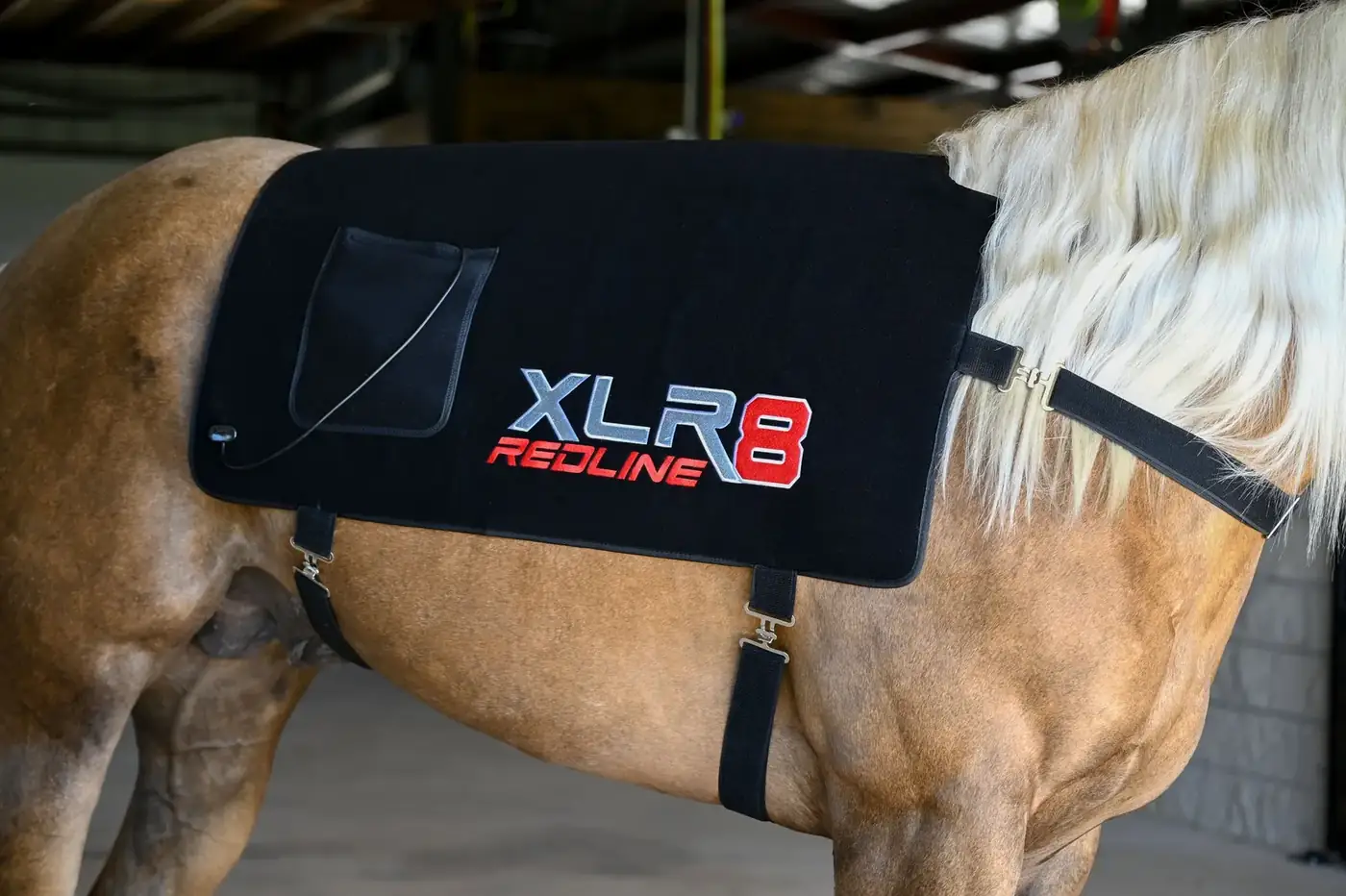
02 · XLR8 Redline
Red and near-infrared light (red/NIR)
Portable LED photobiomodulation devices designed for horses, using 660 nm red and 850 nm near-infrared light. The Back Wrap covers the whole back with 1304 LEDs; the Tendon Wrap and hock wrap are designed for the limbs and are cordless.
Limited evidence Photobiomodulation is being researched in horses, but data on the effects of LED devices in horses are few and mixed – so we use it as a complementary technology.
- Back Relief and Tendon & Ligament: full-back treatment
- Tendon & Ligament Plus/Pro: affected limbs
- Recovery: complementary modality
03 · Therapeutic laser
Targeted laser photobiomodulation
With the laser we treat precisely defined, smaller areas – for example tight back muscles or a limb area diagnosed by the vet. Eye protection for the horse and the operator is always in place.
Moderate evidence Evaluated for back pain in horses in a randomised clinical trial (61 horses) with favourable results; systematic reviews, however, found few high-quality equine studies overall.
- Back Relief: tight, sensitive back areas
- Tendon & Ligament: targeted treatment of the diagnosed area
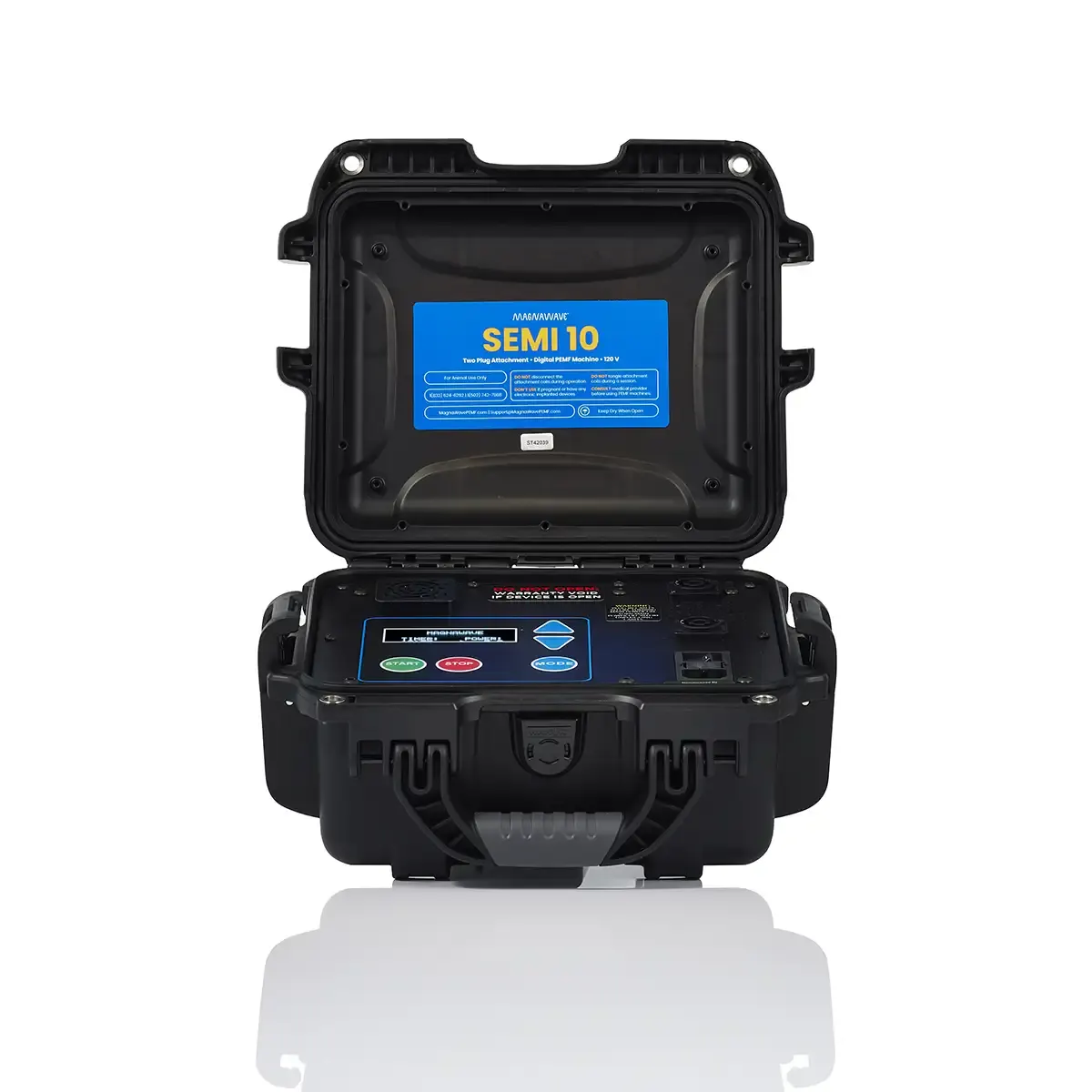
04 · MagnaWave SEMI 10
PEMF – pulsed electromagnetic field
A compact, digital PEMF device with adjustable intensity, timer and different coils for different areas of the body. We adjust treatment to the horse’s response, starting at low intensity.
Preliminary evidence A double-blind study observed changes suggestive of relaxation but did not confirm a significant improvement in recovery; a small uncontrolled study found favourable changes in back pain. We use it as a complementary modality.
- Recovery: non-invasive complementary modality
- Back Relief: as part of comprehensive back care
Machine-based treatment supports active rehabilitation – it doesn’t replace it.
Wondering which combination suits your horse?
The programme depends on your horse’s condition, workload and – where relevant – the veterinary plan.