
Back Relief
Targeted back treatment for horses – for a comfortable back
A multimodal treatment to support tight, high-tone back muscles, trunk stiffness and back comfort. For diagnosed back problems – kissing spine, for example – as a complementary part of rehabilitation.
- Single session or 3 / 5 / 10-session course
- Documented progress
- Price: on request
When is it recommended?
When is Back Relief worth booking?
Tight, high-tone back muscles
Back and trunk stiffness
Diagnosed thoracolumbar back pain
Kissing spine
Hard-working sport horses
Warning signs: vet first
What’s included?
A multimodal treatment for the whole back
Back Relief combines several complementary technologies. At the first session we record the starting point and measure change against it.
- Targeted laser photobiomodulation for tight, sensitive areas
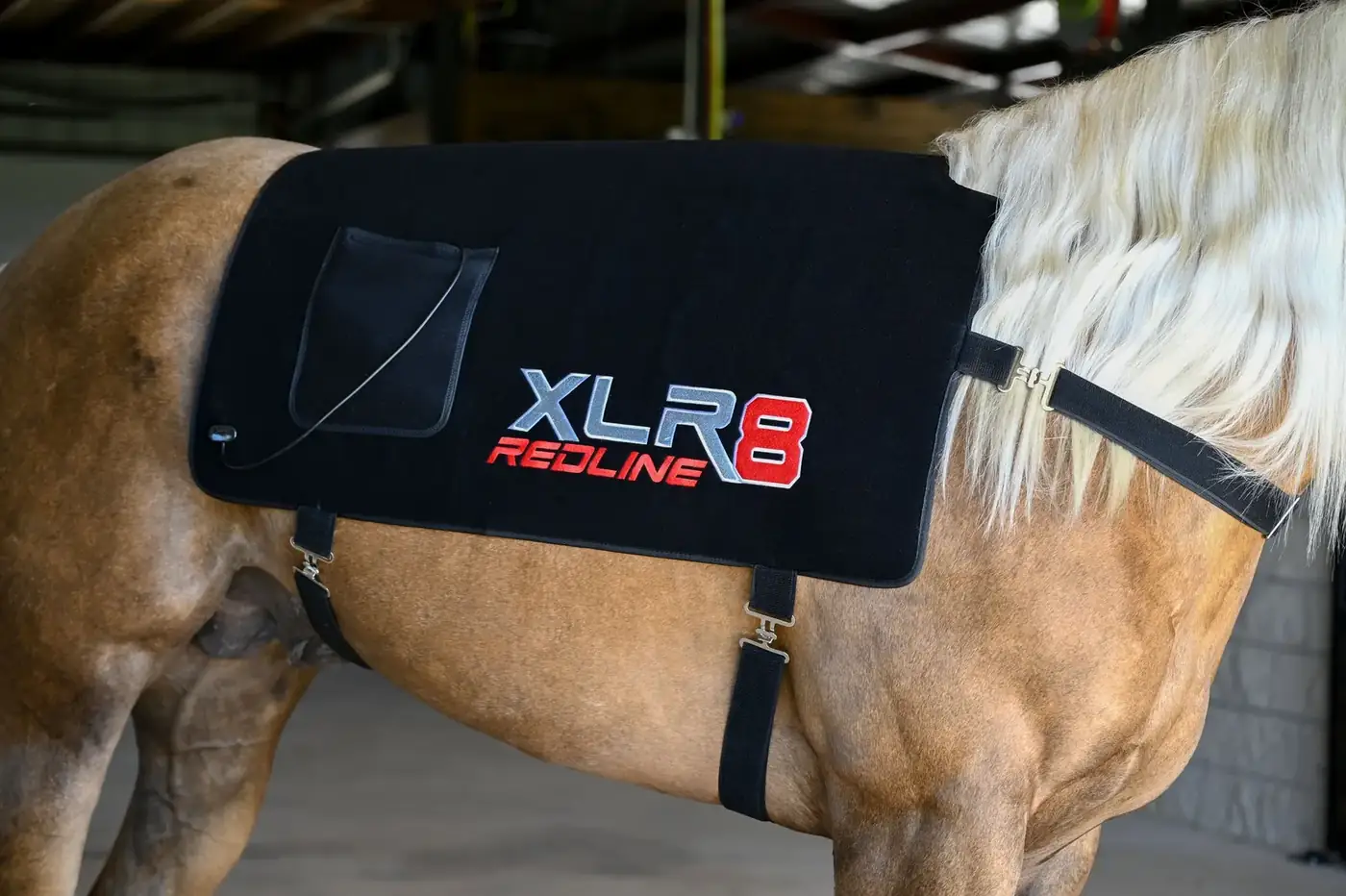
- Full-back red/NIR treatment – XLR8 Redline Back Wrap, 1304 LEDs, 660 and 850 nm
- PEMF as a complementary modality in comprehensive back care
- Progress tracking: sensitive areas, response to palpation, tension, left–right differences
Rehabilitation is a process, not a one-off treatment.
A single session can bring a noticeable change, but for persistent or chronic back problems a regular, well-structured programme is usually more appropriate.
Courses
What length of course might be right?
The number of sessions is not the same as frequency: a 5-session course can be an intensive period or a plan spread over several weeks. The rhythm depends on your horse’s condition, response and – where relevant – the veterinary plan.
3 sessions
- Initial assessment
- Targeted and full-back treatment
- Reassessment at the end
Popular choice
5 sessions
- Initial assessment
- Documentation every session
- Plan adjusted to your horse’s response
10 sessions
- Detailed progress tracking
- Coordination with the veterinary plan
- Regular reassessment
Single session: on request. If your horse doesn’t improve, gets worse or shows a new sign, we recommend a veterinary check rather than further treatment.
Light Aftercare: treatments with a list price of 30 000 Ft or more include one pair of home-use red/NIR light units; for lower-priced treatments they are available for +6 500 Ft. On courses, the list price of the individual session applies.
Machines aren’t everything
Treatment supports active rehabilitation – it doesn’t replace it
Especially with kissing spine and chronic back problems, long-term results depend on getting several factors right together:
- appropriate veterinary treatment and follow-up
- a controlled exercise programme, strengthening back and core muscles
- mobilisation exercises
- correct saddle fit
- ruling out dental and other musculoskeletal problems
- thoughtful training management
Research
In a randomised clinical trial in horses (61 Quarter Horses), low-level laser therapy was associated with significant reductions in back pain, epaxial muscle hypertonicity and trunk stiffness.
Haussler et al.: Journal of Equine Veterinary Science, 2020; 86:102891. The study had no placebo group and our device protocol differs from the one studied – so the same result cannot be guaranteed.
In a preliminary study of 8 horses without a control group, electromagnetic therapy was associated with improved mechanical nociceptive thresholds and spinal flexibility (King et al., 2022).
FAQ
Questions about back treatment
Does it cure kissing spine?
No. The treatment does not change the anatomical position of the vertebrae. It may support the management of back pain, muscle tension and stiffness associated with vet-diagnosed kissing spine, as a complementary part of comprehensive rehabilitation.
How many sessions are needed?
We suggest 3 sessions for lighter needs, 5 for moderate or persistent problems and 10 for longer rehabilitation. Frequency is always individual and can be adjusted during the course.
Why see a vet first if my horse bucks or reacts to saddling?
Because back pain can be the result of many different problems. Without knowing the cause, starting a purely symptomatic treatment programme isn’t sensible: examination first, then targeted rehabilitation.
Is it worthwhile for a healthy sport horse?
Yes, for back maintenance: as complementary support for the backs of sport horses in regular hard work, combined with the recovery programme.
Enquiry
Back Relief treatment
Briefly describe what you have noticed about your horse’s back and, if available, the veterinary diagnosis. We will get back to you within one working day.
- A suggested course length
- In line with the veterinary plan
- Documented progress